
Intermission
This break is brought to you by 400 years of silence

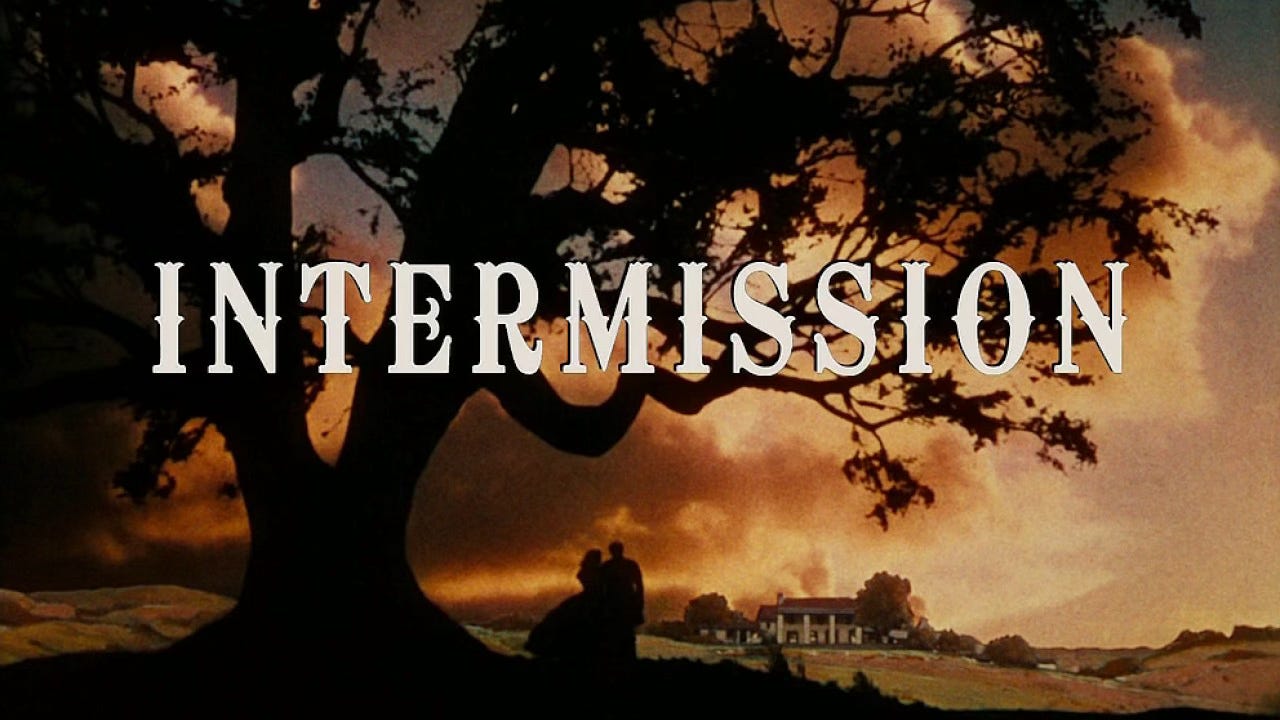
I’ve previously written about my enduring love for the movie Gone with the Wind, and the impact it had on my childhood imagination. This movie is also significant for introducing me to the Intermission. I remember it so clearly: Scarlett just discovered that her beloved home Tara had survived the ravages of the Civil War, but she was left with almost nothing. A desperate, starving Scarlett O'Hara (Vivien Leigh) digs in the dirt at Tara for a carrot, bites into it, and vows, "As God is my witness, I'll never be hungry again.”
Scene cuts to black and then this word appears: INTERMISSION
I was watching with my mother and the following conversation ensues:
“What the heck is happening? Is it over?” I ask, panic in my voice.
“No. It’s the intermission,” Mother patiently replies.
“What the heck is intermission?” (I had a strong affinity for almost-profanity as a child)
“It’s a chance to take a break. Stretch your legs. Get a snack. Take a potty break. It’s a long movie. The second half will begin soon,” she explained.
“What? I don’t need a break! Can we fast forward?”
Hence my life is explained in its entirety.
I don’t like interruptions, intrusions, interferences, interludes, or intermissions. They get in the way of getting on with things.
In other words, I don’t like to wait.
Have I mentioned that?
Scripture’s Intermission
Last week, we watched Nehemiah waiting and praying for God to lead him as he helped the people rebuild the wall surrounding Jerusalem after exiles. With the Temple rebuilt and worshipped restored, the people eagerly awaited the return of God’s presence to the Holy of Holies. And by "eagerly,” I mean they gave up pretty quickly and started focusing on getting their own lives in order.
The prophet Malachi was called by God to intervene. One hundred years after Cyrus’s decree allowed Jews to return to their homeland the rebuild the Temple, God’s people were snarky and struggling. They were facing economic struggles, drought, crop failure, and pestilence. They also continued to live under foreign occupation. What they couldn’t see is that their struggles were directly related to their declining spiritual health.
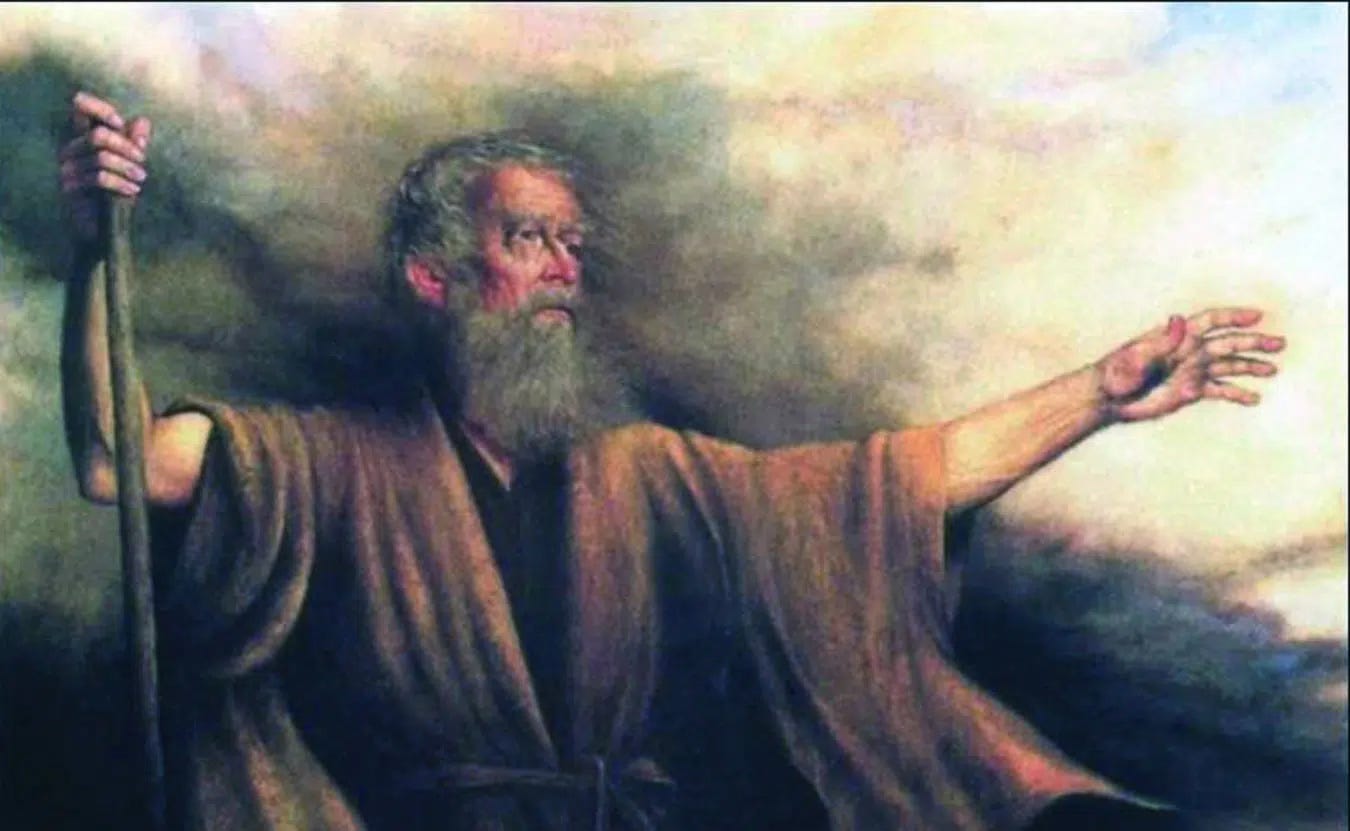
Malachi’s prophecy is divided up into six disputations or arguments. The Lord speaks through Malachi, summing up His issues with his people. It’s actually super fun to read because you can hear the sarcasm coming through:
“I have loved you,” says the Lord. But you say, “How have you loved us?”
Malachi 1:2
“A son honors his father, and a servant his master. If then I am a father, where is my honor? And if I am a master, where is my fear? says the Lord of hosts to you, O priests, who despise my name. But you say, ‘How have we despised your name?’
1:6
And this second thing you do. You cover the Lord's altar with tears, with weeping and groaning because he no longer regards the offering or accepts it with favor from your hand. But you say, “Why does he not?”
2:13-14a
The “But you say”s just kill me. It sounds so much like me in my worst moments. God takes issue with His people’s complacency, greed, and rampant divorce. They aren’t much better off than the generation first sent into exile.
The beauty of this book is in the promise:
Behold, I send my messenger, and he will prepare the way before me. And the Lord whom you seek will suddenly come to his temple; and the messenger of the covenant in whom you delight, behold, he is coming, says the Lord of hosts.
-3:1
The Lord will keep his covenant promises to His people, and He will send a messenger to prepare the way for the Messiah. When the Messiah comes, He will restore the hearts and lives of His people. The Messiah will save the world.
Cue Intermission
The curtain closes on the Old Testament. But this is the longest bathroom break in history, lasting around four hundred years. (God’s really got a thing for four hundred years, doesn’t He? It’s the same amount of time His people were enslaved in Egypt.)
Four hundred years…of silence.
For four hundred years, weekly worship continued…kinda. Powerful families rose and fell. Empires around them rose and fell. The Jewish people were subject to oppression from a host of other people groups. Generations were born and died. Years continued to come and go…and still no Messiah.
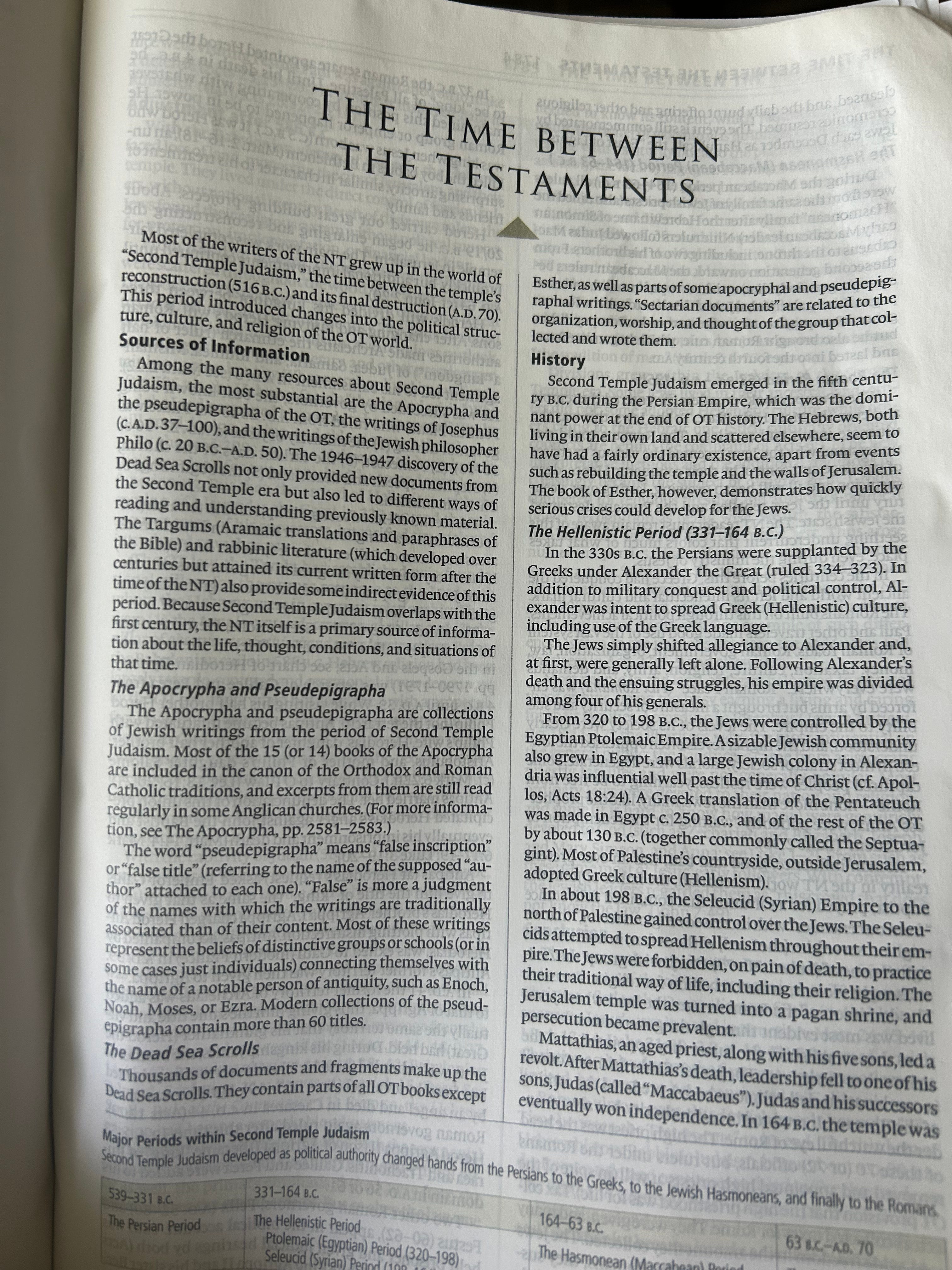
There’s a ten-page section in my Bible that lays out the history of the time between the Testaments. The amount of history provided is staggering. What was God up to during this time? What’s with the silence?
Preparing the Way
My girls recently participated in a wonderful production of Annie, the musical. During our intermission, they had to change costumes, change sets, fix their hair and make-up, all in preparation for the final act. From where I waited, all I saw was a curtain. It reminded me that this is exactly where I sit in God’s production. I can’t see what He’s preparing. But when I think about what happened during those four hundred years of silence, I know this: The world wasn’t ready for Jesus’ coming. The set needed changing. The actors needed to change. The very roads that would take the Gospel out of Jerusalem needed to be built.

Whatever else was happening in the silence, the Lord was preparing the world for His Son’s coming.
Sometimes it takes more faith to trust the Lord when He’s silent than to obey Him when He speaks. The waiting, as we have seen, grows our tolerance for mystery. It forces us to imagine beyond what we can see with our own eyes. Waiting grows our hope.
After four hundred years of waiting, no one was prepared when Jesus finally arrived. Well, they weren’t prepared for Jesus to arrive the way He did and to be the kind of King He was (and is). We’ll look closer at His life and death next week.
The hardest waiting of all is coming. Prepare the way in your hearts.
Very Good! Thanks
Wow