
Walk Humbly
Remember who you walk with

Though we’ve been studying the New Testament letters these many weeks, a passage from Micah the prophet seems an appropriate word to conclude our series on walking with God.
Micah was called by God to bring a lawsuit against His people. During this period of history, the divided kingdom of northern Israel and southern Judah were not walking in obedience, in light, or in truth of God’s word. Micah’s purpose was to expose and call back God’s people to the path.

The dramatic scene unfolds with the mountains and the hills as witnesses to the testimony (Micah 6:2):
“My people, what have I done to you?
How have I burdened you? Answer me.
I brought you up out of Egypt
and redeemed you from the land of slavery.
I sent Moses to lead you,
also Aaron and Miriam.-vs. 3-4
God begins His argument by reminding His people of His faithfulness to them. Not only has He not burdened them, but His whole relationship with them is based on His desire to set them free.
Let’s meditate on this truth for a moment, for it applies still today. God’s primary stance towards you is not to burden you with laws and rules to follow. He’s not standing over you with a look of glaring disapproval. He wants to redeem you from slavery. He wants to free you.
Enslaving Ourselves
Once God reminds His people of the great rescue mission back in Egyptian slavery days, He goes on to cite a powerful example of the real problem for His nation:
My people, remember
what Balak king of Moab plotted
and what Balaam son of Beor answered.
Remember your journey from Shittim to Gilgal,
that you may know the righteous acts of the Lord.-vs. 5
Israel is asked to remember their history. Once there was a king—King Balak—who hated God’s people. He sought a prophet (Balaam) to curse them. It didn’t work. In fact, four times Balaam attempted to curse Israel, but his words came out as blessings. In Numbers 25, King Balak finds another tactic. He sends Moabite women into the camp of Israelites. They succumb to temptation, inciting God’s anger.
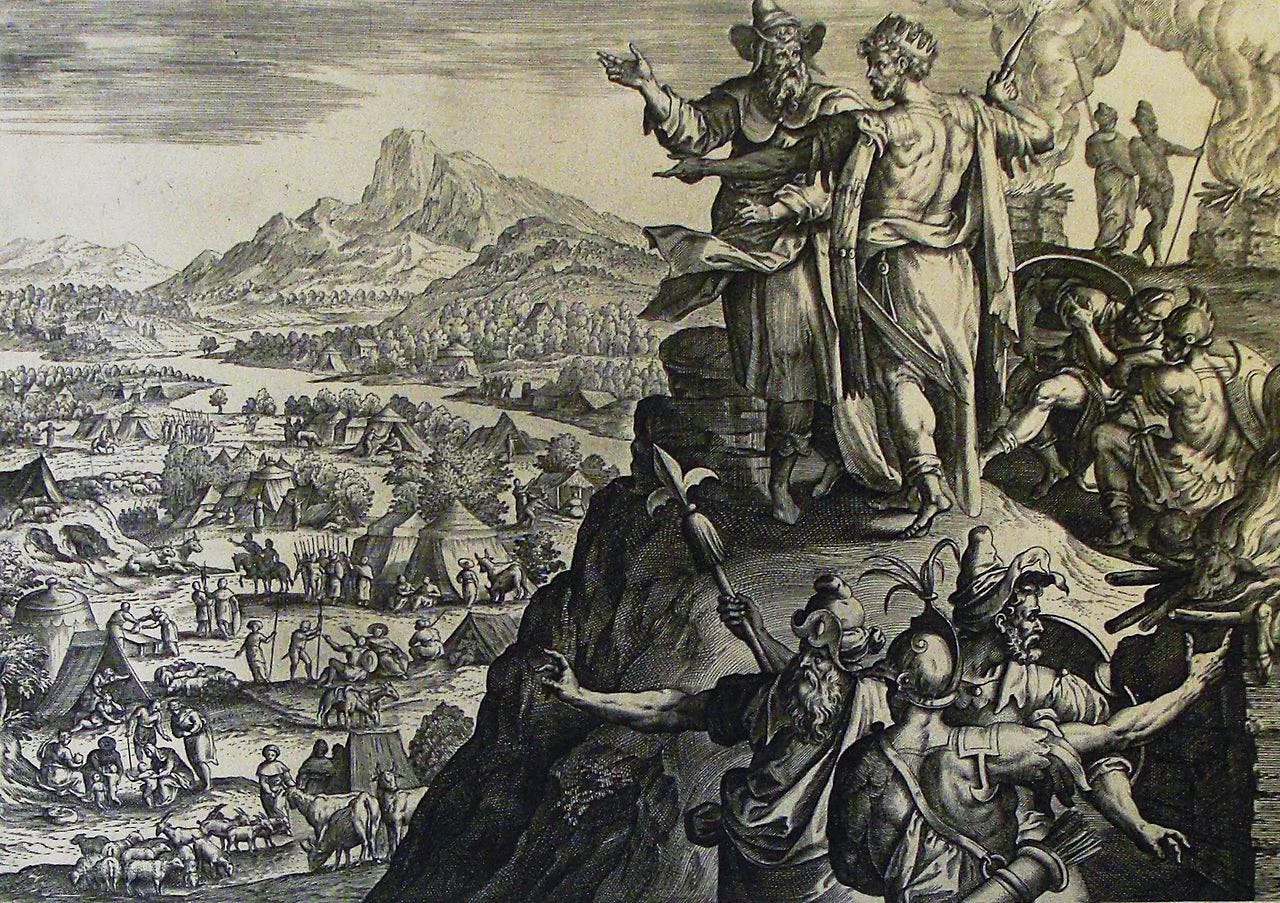
Through Micah, God is reminding Israel that whatever judgement they have experienced in the past, it’s been brought on themselves by their own choices.
The burdens and suffering we experience are brought on us by ourselves.
What do you want from me?
As this dramatic court scene continues, Israel now answers God’s accusations:
With what shall I come before the Lord
and bow down before the exalted God?
Shall I come before him with burnt offerings,
with calves a year old?
Will the Lord be pleased with thousands of rams,
with ten thousand rivers of olive oil?
Shall I offer my firstborn for my transgression,
the fruit of my body for the sin of my soul?-vs. 6-7
If you’ve ever argued with a dramatic teenager, you get these two verses. Israel uses hyperbole to express the deep belief in their heart: God is simply asking too much of them.
Do you ever feel this way? Perhaps you think about all the things you enjoy doing, realize that Scripture speaks directly against those things, and throw up your hands with an exasperated sigh. Nothing can possibly make this God happy, right?
Three Things
I often have to remind myself of God’s response to His beloved, rebellious nation when I’m interacting with my own teenager. He moves towards:
He has shown you, O mortal, what is good.
And what does the Lord require of you?
To act justly and to love mercy
and to walk humbly with your God.-v. 8
He offers life to His people. This life is found on the path we walk. He’s already shown us the way. Three things:

Act justly. Treat other pilgrims on this journey as you want to be treated. Be fair. Be faithful to your word. Offer yourself willingly to those around you.
Love mercy. It’s one thing to show mercy to others. It’s something else entirely to love mercy. He’s asking you to love what He has given you. Closeness—undeserved. Live your life in such a way that you seek out the chance to offer mercy to others.
Walk humbly. This is the only place in Scripture where “humbly” is used. The word in Hebrew is “tsa.na,” meaning “to be humble, be modest, be lowly.” The word draws upon this idea that we should consider ourselves in light of who God is. Think of ourselves rightly. We have no reason to boast. We bring nothing to the table. We’re on this path by grace alone.
Perhaps all of commands of God can be summed up here. He offers us life abundantly. He sets us on the path and walks before us, behind us, and next to us. His commands allow us to flourish. Along the way, He provides places of rest, refuge, and even growth. He allows our paths to cross with others, so that we might practice these things we were made to do.
Dear friends, walk with Him. His path will lead you home.